
At Back2Balance, we are huge believers in practising what we preach.
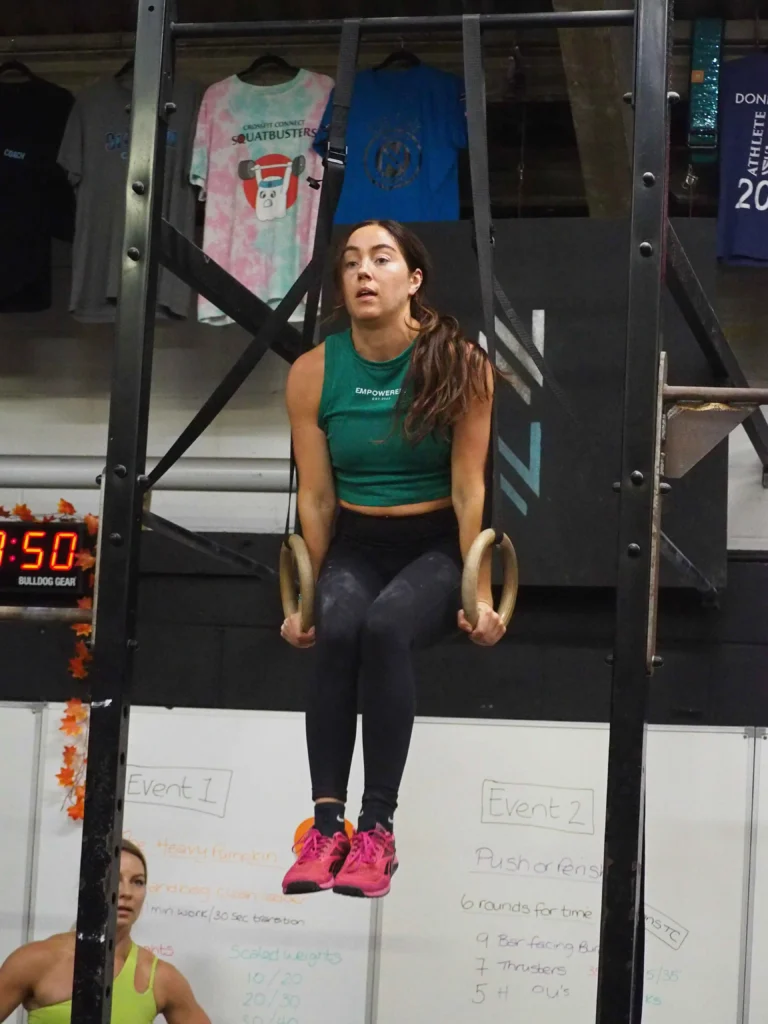
For the last 7 years, I have consistently trained and competed in CrossFit which is a training methodology combining strength work, cardiovascular fitness, gymnastics skills and functional movement to build a strong, resilient, all-round body capable of handling the demands of everyday life.
For 5 of those years, I have followed structured programming under the guidance of my coach. Over that time, I have gone from being naturally skinny to building muscle, strength and fitness. Training has also helped me-
- Build resilience and discipline
- Meet some great friends and have some amazing times competing
- Stay physically robust in day-to-day life
- Maintain the energy needed to adjust all day whilst protecting my own body long term!
More importantly, I genuinely believe strength training is one of the best investments we can make in our future health. I train because I want to be the 90-year-old still walking upstairs independently, still lifting weights, still squatting and still capable of living life fully.
Most days, I love going to the gym. It has become such an ingrained part of my routine that I cannot imagine life without it, but of course, there are still days where I have to drag myself there!!
A passion for movement and strength is exactly why we decided to host our gym workshop this Saturday. However, for those who cannot attend, I wanted to put together some key principles to help you become successful with exercise and make it a sustainable part of your life.
1. Prioritise a Proper Warm-Up
Warm-ups do not need to take forever, but skipping them significantly increases your risk of injury, stiffness and imbalance.
An effective warm-up should focus on:
- Dynamic movement
- Increasing blood flow
- Mobilising joints
- Preparing your body for the workout ahead
Save static stretching for after your session.
A good warm-up starts by generally warming up your whole body and then becomes more specific. For example:
- Before squats: mobilise hips, knees and ankles
- Before pull-ups: prepare shoulders and upper back
I’ve attached a video showing how I personally warm up before training:
My Gym Warm-Up Routine on YouTube
If you would like ideas for warming up specific exercises, just ask us!
2. Don’t Avoid Exercises Forever Because of Pain
One of the most common things I hear is:
“I stopped doing squats and deadlifts because they hurt my back.”
That makes me sad, because usually it is not the exercise itself that is the problem.
In many cases, movements like squats and deadlifts are exactly what help people build stronger, more resilient backs.
That said, pain should never be ignored. If a movement aggravates your symptoms, get curious about why:
- Is it technique?
- Mobility?
- Load management?
- Stability?
- Recovery?
- Existing dysfunction?
Sometimes small changes make a huge difference.
Pain is information, not something to fear or ignore.
3. Don’t Ignore Symptoms Hoping They’ll Go Away
This is a big one.
Many people wait months before seeking help, hoping pain will magically disappear.
Sometimes symptoms settle temporarily, but unresolved issues often come back bigger and more limiting later on.
Addressing issues early almost always leads to:
- Faster recovery
- Better long-term outcomes
- Less compensation elsewhere in the body
- Less frustration
4. Have Structure
A huge number of people join gyms and stop going within a few weeks.
One of the biggest reasons is lack of structure.
People often:
- Wander aimlessly around the gym
- Spend all session on cardio equipment
- Randomly choose exercises
- Never progressively improve
The best thing you can do is follow a programme.
Whether that is:
- A structured online programme
- A gym class
- A coach-written plan
- A personal trainer
Having structure removes decision fatigue and gives you direction.
You walk into the gym already knowing what you are doing.
Better still, progress becomes measurable and progress is motivating.
5. Find Exercise You Actually Enjoy
You are far more likely to stay consistent if you genuinely enjoy the type of exercise you do.
That could be:
- Strength training
- Running
- Cycling
- CrossFit
- Pilates
- Hyrox
- Classes
- Swimming
- Hiking
There is no perfect form of exercise.
The best exercise is the one you can consistently stick to.
Training with other people also helps massively with motivation and enjoyment.
6. Don’t Be Afraid to Lift Weights
Resistance training is one of the most powerful tools we have for long-term health.
Research consistently shows strength training:
- Improves bone density
- Reduces osteoporosis risk
- Improves insulin sensitivity
- Improves metabolic health
- Reduces risk of heart disease and type 2 diabetes
- Improves mental health
- Improves longevity and quality of life
After the age of 30, adults can lose approximately 3% of muscle mass per decade if they are not actively strength training.
Muscle is one of the biggest predictors of healthy ageing.
Loss of muscle mass is associated with:
- Frailty
- Falls
- Reduced independence
- Increased mortality risk
Strength training is not just about aesthetics.
It is one of the best forms of preventative healthcare available.
7. Grip Strength Is a Powerful Predictor of Longevity
Interestingly, grip strength is strongly associated with overall health and longevity.
Research has shown lower grip strength correlates with:
- Increased mortality risk
- Reduced muscle mass
- Poorer nervous system function
- Higher risk of disability later in life
At the clinic, we test grip strength because it can also tell us a lot about nerve function from the neck into the arms.
One of my favourite tests I heard about on a podcast was simple:
Can you hang from a bar for 2 minutes?
It sounds easy… until you try it.
Let me know how long you can manage.
8. Technique Matters
Good form matters, especially when lifting heavier weights or dealing with previous injuries.
If you are unsure whether you are performing an exercise correctly:
- Ask a coach
- Ask a PT
- Film yourself
- Get feedback
Most people in gyms are actually very friendly and happy to help.
I still regularly film my lifts and send them to my coach for feedback.
Even experienced athletes continue refining movement quality.
That is also exactly why we wanted to host this workshop:
to help people feel more confident with fundamental movements like:
- Squats
- Deadlifts
- Farmer’s carries
- Burpees
- Sandbag cleans
These are all movements that directly translate into real-life strength and resilience.
Final Thoughts
Your body is designed to move.
Strength, mobility and fitness are not just about performance or aesthetics, they are about maintaining independence, confidence, resilience and quality of life for as long as possible.
Exercise should not be viewed as punishment.
It is an investment in your future self.
Start small.
Stay consistent.
Build strength gradually.
Your future body will thank you for it.